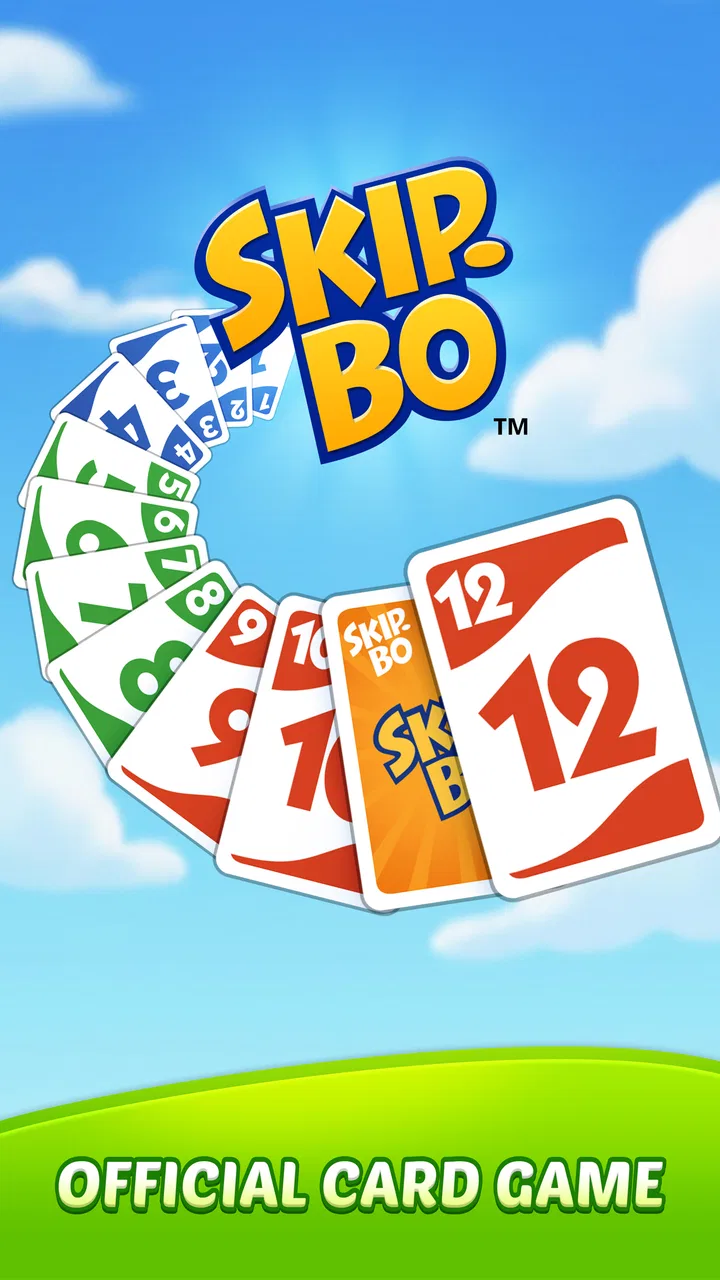
Skip-Bo™: Solitaire Card Game
- 4.8
- Rating
- 10.00M
- Installs
- Free
- Price
 Analysis by App-foxy
I came away from Skip-Bo™: Solitaire Card Game thinking that its biggest strength is not speed or spectacle, but the way it turns a familiar card-game idea into a surprisingly thoughtful short-session challenge. I can open it when I have only a few minutes, yet the decisions are meaningful enough that I do not feel I am simply tapping through an automatic solitaire routine. It is a free card game from Mattel163 Limited, aimed at Everyone, and it has the broad appeal you would expect from a well-known tabletop concept while still asking me to plan ahead.
The central appeal is easy to understand. I work through cards in sequence, trying to manage what is available now without ruining the options I may need later. That sounds simple, and the opening rounds are approachable, but the real enjoyment comes from deciding which move is merely possible and which move is actually wise. The app’s store summary calls it “Solitaire Cards with a Twist,” and that description fits better than a generic solitaire label: this is less about quietly clearing a fixed layout and more about managing a changing set of choices.
Why the card play feels more thoughtful than ordinary solitaire
In my experience, the best part of the game is the tension between immediate progress and future flexibility. A card that can be played right away is not automatically the correct card to use. Sometimes I hold back a useful option because spending it too early would leave an awkward gap in my plan. Other times, delaying a move only makes the next turn harder. That small push and pull gives each round a personality, even when the basic rules remain familiar.
You May Also Like

 Blood Strike: 2.5 Anniversary
Blood Strike’s Loadouts Turn Every Drop Into a Tactical Gamble
A close look at Blood Strike’s custom loadouts: how fast access to signature weapons reshapes its battle royale rhythm, rewards preparation, and narrows the gap between fights.

 Pandora - Music & Podcasts
Pandora’s Music Is Easy to Start, but Harder to Recover
Pandora’s strength is its low-effort path from a seed to a station. Its weak spot is how much confidence it asks you to place in connection, setup, and quiet recovery.

 8 Ball Pool
 Is Built on Rivalries, Rematches, and Routine
A close look at the rivalries, rematches, shared routines, and unanswered safety questions that turn a quick pool match into a persistent mobile community.

 Samsung Music
’s Quiet Strength Is Playing What You Already Own
Its reach comes less from spectacle than from dependable access to a personal library. That simplicity is both the app’s strongest retention engine and its ceiling.

 AccuWeather: Weather Radar
AccuWeather Review: A Quick, Clear Forecast for Everyday Decisions
For everyday plans, the best forecast is the one you can understand quickly. AccuWeather makes rain timing, radar, and local conditions easy to act on, with a few trade-offs.

 Hill Climb Racing
Why Hill Climb Racing Still Turns Crashes Into One More Run
A tiny car, a bumpy hill and one more upgrade: Hill Climb Racing keeps resurfacing because its simple chaos makes every near-miss feel personal.
More From Our News Desk
View All News


This makes the game a good fit for players who like card puzzles but do not want to learn a complicated ruleset. I can understand the basic objective quickly, then improve by noticing patterns in my own decisions. The learning curve is gentle at the start, but there is enough room for better sequencing, more careful storage of cards, and smarter use of opportunities. I appreciate that the challenge comes from choices rather than from a long explanation before I can begin.
The solitaire structure also makes it comfortable to play alone. I do not need to coordinate with another person or wait for a match to fill. That matters in everyday situations: I can play during a short break, while waiting for an appointment, or at home when I want something interactive without committing to a long story or a demanding action game. A round can feel like a quick mental reset, especially when I treat it as a self-contained puzzle rather than chasing an endless session.
One useful habit is to pause before making the first available move. I look at all visible possibilities and ask which play opens the most useful follow-up, rather than which one simply removes a card fastest. This is especially valuable when several cards appear playable. The app rewards that brief inspection, and it is one of the clearest differences from very casual solitaire games where the best move is often obvious.
Another practical tip is to treat the cards I set aside as part of my plan, not as a dumping ground. A careless discard can make a later sequence unnecessarily difficult. I found that grouping my thinking around future access—what I can reach next, what I am blocking, and which card might become valuable later—makes the game feel much more controlled. That approach also helps new players improve without needing advanced terminology or a guide open beside them.
The game’s popularity suggests that this balance is connecting with a large audience. It has an average rating of 4.8 from around 377 thousand ratings, with more than 10 million installs. I would not treat those figures as a guarantee that every player will enjoy it, but they do match my impression that the rules are easy to approach and the core loop has staying power beyond a single trial round.
A familiar foundation with a different rhythm
Compared with classic solitaire, this feels more deliberate. Traditional solitaire often emphasizes clearing a layout through a mostly visible chain of moves. Here, I spend more time weighing the order of actions and protecting future possibilities. If I want a calm, recognizable card pastime, either style can work. If I want each move to carry a little more planning pressure, this version has the stronger pull for me.
It also compares favorably with fast multiplayer card apps when I am not in the mood for pressure from another person. There is no need to match someone else’s pace in the moment, and a mistake feels like a lesson rather than an immediate defeat in front of an opponent. On the other hand, players who enjoy bluffing, conversation, or the unpredictability of live competition may find the solo structure too quiet. The game’s strength is focused decision-making, not social interaction.
Against more elaborate digital card games, its restraint is welcome. I do not have to learn a collection of decks, character abilities, or layered progression systems before I can enjoy a round. That simplicity is also the main trade-off: anyone looking for deep deck construction, a role-playing layer, or a large strategic ecosystem should look elsewhere. This is a focused card experience, and it works best when judged on that basis.
Where the free model affects the experience
The game is free to download, which makes trying it easy, but it includes in-app purchases ranging from $0.99 to $149.99 per item. That broad range is worth keeping in mind before spending. I would approach the purchase system cautiously and decide in advance whether I am happy to enjoy the basic game without buying extras. For a casual card title, setting that boundary early is sensible, particularly if the device is shared with younger players.
The Everyone age rating makes it suitable for a broad audience, but “suitable for everyone” does not mean every family will want the same purchase setup. If I were installing it for a child, I would still review the device’s purchase controls and make sure the account settings match my expectations. That is not a criticism of the card rules themselves; it is simply good practice for any free game that offers optional paid items.
The other limitation is that the core loop can become repetitive for players who need constant novelty. I enjoy repeating a clear card challenge because small improvements are satisfying, but someone who wants new environments, a changing narrative, or dramatic round-to-round variety may lose interest. The game’s appeal depends on finding pleasure in refinement: spotting a better sequence, avoiding an unnecessary block, and finishing a round with fewer wasted opportunities.
I also would not choose it as my first option when I want a completely passive way to relax. Even a short session asks me to pay attention. If I am tired and only want something that plays itself, this may feel more demanding than expected. That is a meaningful distinction: the game is accessible, but it is not mindless. Its best moments come when I am willing to think for a few seconds before committing to a move.
Small decisions that make everyday play better
My most reliable approach is to divide a round into three questions. First, what can I play immediately? Second, which move creates the most useful next step? Third, am I using a card because it is strategically good, or simply because it is available? This quick checklist prevents rushed decisions and works well when I am playing on a small screen or squeezing in a round between other tasks.
I also recommend using short sessions intentionally. Instead of opening the game with the expectation of playing indefinitely, I might play one or two rounds during a break and then stop. That keeps the experience refreshing and makes it easier to notice improvement. When I do continue, I try to change my focus: one round may be about avoiding premature moves, while another may be about clearing sequences efficiently. Giving myself a small objective makes repetition feel more purposeful.
For beginners, the best way to learn is not to chase perfect play immediately. I would first concentrate on understanding how the available cards interact, then pay attention to the moments when a promising move creates a problem later. Those mistakes are informative because they reveal the game’s real lesson: progress is not only about what I can do now, but also about what I am preserving for the next stage.
For experienced solitaire players, the interesting challenge is resisting automatic habits. Familiar card games can encourage me to make the move I recognize fastest, but this title is more rewarding when I question that instinct. I found that the biggest improvement came from slowing down before a sequence that looked obvious. The extra moment often exposed a better order or showed that I was about to consume a useful option too soon.
Who should install it, and who should skip it
I would recommend it to people who enjoy solitaire but want more planning in each round. It is also a strong choice for casual players who prefer a game that can be learned quickly and played alone, without the commitment of a long campaign. Families may appreciate the approachable card format, while puzzle fans can enjoy the gradual improvement that comes from making fewer impulsive moves.
It is particularly well suited to short, interrupted play. If I am waiting for transport or taking a quiet break, I can return to the same kind of challenge without having to remember a complicated plot or rebuild a strategy from scratch. The card format also makes it a good alternative to endlessly scrolling through social feeds: it gives my attention a small, contained task instead of demanding a large block of time.
I would skip it if my priority is competitive multiplayer, elaborate customization, or a constantly changing stream of content. I would also choose a more traditional solitaire app if I wanted the purest version of a familiar layout with minimal extra decision-making. And if optional purchases are a major concern, I would only install this after checking my device controls and deciding how I want to handle the free-to-play elements.
Device compatibility is fairly broad: the current version is 1.12.1710 and supports Android 5.0 or later. That makes it accessible on many older Android devices, although the experience will naturally depend on the phone’s screen, responsiveness, and general condition. I value that lower operating-system requirement because a simple card game should not need a recent flagship phone to be useful.
My final take after weighing the trade-offs
After spending time with it, I see Skip-Bo™: Solitaire Card Game as a focused, approachable card game that succeeds because it gives simple rules enough strategic weight to remain interesting. It is not trying to replace a competitive card table, a deck-building game, or a story-driven adventure. Instead, it offers a compact solo challenge built around sequencing, patience, and making the most of limited options.
The free entry point is attractive, the Everyone rating keeps the concept broadly approachable, and the large player base reflects its easy-to-understand appeal. The purchase range means I would keep an eye on spending, and the repeated structure will not suit players who need constant novelty. Those are real considerations, but neither undermines the central card experience when approached with the right expectations.
My recommendation is straightforward: install it if you want a familiar card game with a little more thought behind every move, especially for short solo sessions. Give it a pass if you need live competition, deep customization, or a game that changes dramatically from one play to the next. For me, its strongest quality is that it respects a few spare minutes while still giving them enough substance to feel worthwhile. It is simple to start, but not so simple that the decisions stop mattering.
FAQs for Skip-Bo™: Solitaire Card Game
01What is Skip-Bo™: Solitaire Card Game?
Skip-Bo™: Solitaire Card Game is a digital adaptation of the classic card game, Skip-Bo. It combines elements of strategy and luck, where players aim to be the first to play all their cards in sequential order. The app provides both solo and multiplayer modes, making it perfect for both casual and competitive play.
02Is Skip-Bo™: Solitaire Card Game available for free?
Yes, Skip-Bo™: Solitaire Card Game is free to download on both Android and iOS platforms. However, it offers in-app purchases for additional features, such as extra card packs or ad removal, which can enhance the gaming experience. Users can enjoy the core game without any cost.
03Can I play Skip-Bo™: Solitaire Card Game offline?
Yes, Skip-Bo™: Solitaire Card Game provides an offline mode, allowing you to play without an internet connection. This is particularly useful for players who want to enjoy the game on the go or in areas with limited connectivity. However, online features like multiplayer will require internet access.
04How does multiplayer mode work in Skip-Bo™: Solitaire Card Game?
In multiplayer mode, Skip-Bo™: Solitaire Card Game allows you to compete against friends or players worldwide. You can invite friends through social media or join random matches. The game ensures a seamless experience with chat options and leaderboards to enhance social interaction and competition.
05Are there any tips for winning in Skip-Bo™: Solitaire Card Game?
To increase your chances of winning, focus on clearing your stockpile as quickly as possible. Pay attention to the discard piles and plan several moves ahead. Managing your hand and anticipating opponents’ moves can also provide a strategic edge. Practice and patience are key to mastering the game.
Pros
- Engaging multiplayer mode available.
- Easy to understand interface.
- Regular updates with new features.
- Offline play option included.
- Colorful and appealing graphics.
Cons
- In-app purchases can be pricey.
- Occasional connectivity issues.
- Ads can be intrusive at times.
- Limited customization options.
- Requires frequent updates.

Skip-Bo™: Solitaire Card Game
Gallery